

How to Choose the Best Wireless Nurse Call Bell System for Your Hospital
Updated: Sep 21

Selecting the right Wireless Nurse Call Bell System is an important investment for any healthcare facility. A reliable nurse calling system improves communication between patients and healthcare staff, reduces response times, and enhances the overall quality of patient care.
However, not every nurse call system offers the same features. Hospitals, clinics, nursing homes, rehabilitation centers, and elderly care facilities all have different requirements. Choosing the wrong system can lead to poor communication, limited coverage, and unnecessary maintenance costs.
This guide explains the key factors you should consider before purchasing a Wireless Nurse Call Bell System, helping you make an informed decision that meets both your current and future needs.
Why Choosing the Right Nurse Call Bell System Matters
A nurse call bell is much more than a communication device. It is a critical part of patient safety and hospital operations.
When patients can quickly request assistance, nurses can respond faster, improving patient satisfaction and reducing potential risks.
A well-designed system also helps healthcare staff manage multiple patient requests efficiently, creating a smoother workflow throughout the facility.
Some of the key benefits include:
Faster response times
Better patient safety
Improved communication
Increased staff efficiency
Lower operational costs
Easier hospital management
Understand Your Hospital's Requirements
Before comparing products, evaluate your healthcare facility's specific needs.
Hospital Size
A small clinic has different communication requirements than a multi-floor hospital.
Consider:
Number of patient rooms
Number of beds
Number of hospital floors
Distance between wards
Future expansion plans
Choosing a scalable system ensures it continues to meet your needs as your facility grows.
Type of Healthcare Facility
Different healthcare environments require different configurations.
Suitable for:
General Hospitals
Multi-Specialty Hospitals
Clinics
Nursing Homes
Elderly Care Centers
Rehabilitation Centers
Dialysis Centers
Maternity Hospitals
Check the Wireless Coverage Range
Wireless range is one of the most important buying factors.
The system should provide reliable communication throughout the hospital without signal loss.
Standard Coverage
Most wireless nurse call systems offer coverage of approximately 100 meters in open areas.
This is suitable for:
Clinics
Small hospitals
Single-floor healthcare facilities
Large Hospitals
Larger hospitals may require:
Signal boosters
Additional receivers
Multiple nurse stations
Before purchasing, always consider your building layout rather than only the maximum advertised range.
Choose the Right Receiver Type
A nurse call system is only as effective as the devices receiving the alerts.
Display Receiver
A Display Receiver is usually installed at the nurse station.
Benefits include:
Displays room or bed number
Audible alerts
Centralized monitoring
Easy visibility
This is ideal for hospitals with dedicated nursing stations.
Watch Receiver
A Watch Receiver allows nurses to receive patient calls while moving throughout the hospital.
Benefits include:
Portable notifications
Faster response
Improved mobility
Better workflow
Many hospitals combine both Display Receivers and Watch Receivers for maximum efficiency.
Check Multi-Receiver Support
One important feature to consider is whether a single call button can send alerts to multiple receivers.
For example, one patient call can notify:
Nurse station display
Assigned nurse's watch
Duty supervisor's watch
Backup nurse
This reduces the chances of missed calls during busy periods.
Consider Expandability
Hospitals often expand over time by adding:
New patient rooms
Additional wards
New departments
Choose a Wireless Nurse Call Bell System that allows you to add:
Additional Call Buttons
Install new buttons without replacing the existing system.
Extra Watch Receivers
Assign receivers to new nurses or departments.
Additional Display Receivers
Monitor calls from multiple nurse stations.
A scalable system protects your investment for years to come.
Evaluate Installation Requirements
One major advantage of wireless systems is easy installation.
Look for systems that offer:
No wiring
Plug-and-play setup
Simple device pairing
Quick deployment
This minimizes disruption to hospital operations and reduces installation costs.
Battery Performance Matters
Wireless devices rely on batteries for uninterrupted communication.
Before purchasing, check:
Battery life
Low battery alerts
Easy battery replacement
Battery availability
Regular battery maintenance helps ensure continuous operation.
Look for Reliable Signal Performance
Hospitals contain medical equipment, concrete walls, elevators, and multiple departments that may affect wireless communication.
A quality Wireless Nurse Call Bell System should provide:
Stable signal transmission
Fast response
Reliable communication
Minimal interference
Testing the system before full deployment is always recommended.
Easy Operation for Patients and Staff
Healthcare technology should be simple to use.
Patient Side
The call button should be:
Clearly visible
Easy to press
Comfortable for elderly patients
Accessible for patients with limited mobility
Staff Side
Receivers should provide:
Clear room numbers
Easy-to-read displays
Audible alerts
Vibration mode
Simple operation
The easier the system is to use, the more effective it becomes.
Check Warranty and After-Sales Support
Healthcare communication systems operate daily and require dependable support.
Before buying, ask about:
Product warranty
Technical assistance
Spare parts availability
Product training
Customer support
Reliable after-sales service ensures your system continues operating efficiently.
Compare Overall Cost Instead of Just Price
The cheapest product is not always the best value.
Consider the total cost, including:
Initial Purchase Cost
Compare products based on included components.
Installation Cost
Wireless systems generally reduce installation expenses because no wiring is required.
Maintenance Cost
Choose products that require minimal maintenance.
Future Expansion Cost
Expandable systems save money as your hospital grows.
A slightly higher-quality system often provides better long-term value.
Questions to Ask Before Buying
Before making a purchase, ask the supplier:
What is the wireless coverage range?
Can the system be expanded later?
Does one button support multiple receivers?
Is a watch receiver included?
Can multiple nurse stations receive alerts?
How long do the batteries last?
What warranty is provided?
Is technical support available?
Are spare parts readily available?
Is installation assistance provided?
These questions help ensure you're choosing the right solution for your healthcare facility.
Common Mistakes to Avoid
Many buyers focus only on price and overlook important technical requirements.
Avoid these common mistakes:
Buying Without Measuring Coverage
Always evaluate your building layout before selecting a system.
Ignoring Future Expansion
Choose a system that can grow with your hospital.
Choosing Limited Receiver Options
A system that supports both Display Receivers and Watch Receivers offers greater flexibility.
Overlooking Warranty
Good after-sales support is just as important as the product itself.
Not Testing Before Deployment
Always test communication across different hospital areas before full implementation.
Frequently Asked Questions
What is the ideal wireless range for a hospital?
Most systems provide around 100 meters in open areas. Larger hospitals may require signal boosters or additional receivers.
Should I choose a Display Receiver or a Watch Receiver?
For the best results, many hospitals use both. Display Receivers provide centralized monitoring, while Watch Receivers allow nurses to receive alerts wherever they are.
Can one patient call button notify multiple nurses?
Yes. Many wireless nurse call systems support multiple receivers for a single call button.
Is a wireless system suitable for an existing hospital?
Yes. Wireless systems are ideal for existing hospitals because they require no complex wiring or structural modifications.
Can the system be expanded later?
Yes. A good Wireless Nurse Call Bell System allows additional call buttons, receivers, and accessories to be added as your healthcare facility grows.
Conclusion
Choosing the right Wireless Nurse Call Bell System is about more than comparing prices. A reliable system should provide fast communication, dependable wireless coverage, easy installation, future scalability, and simple operation for both patients and healthcare professionals.
By carefully evaluating your facility's size, receiver requirements, wireless range, expandability, and after-sales support, you can invest in a solution that improves patient care while increasing staff efficiency.
Whether you're managing a hospital, clinic, nursing home, or rehabilitation center, selecting a high-quality Wireless Nurse Call Bell System will help create a safer, more responsive, and better-connected healthcare environment.
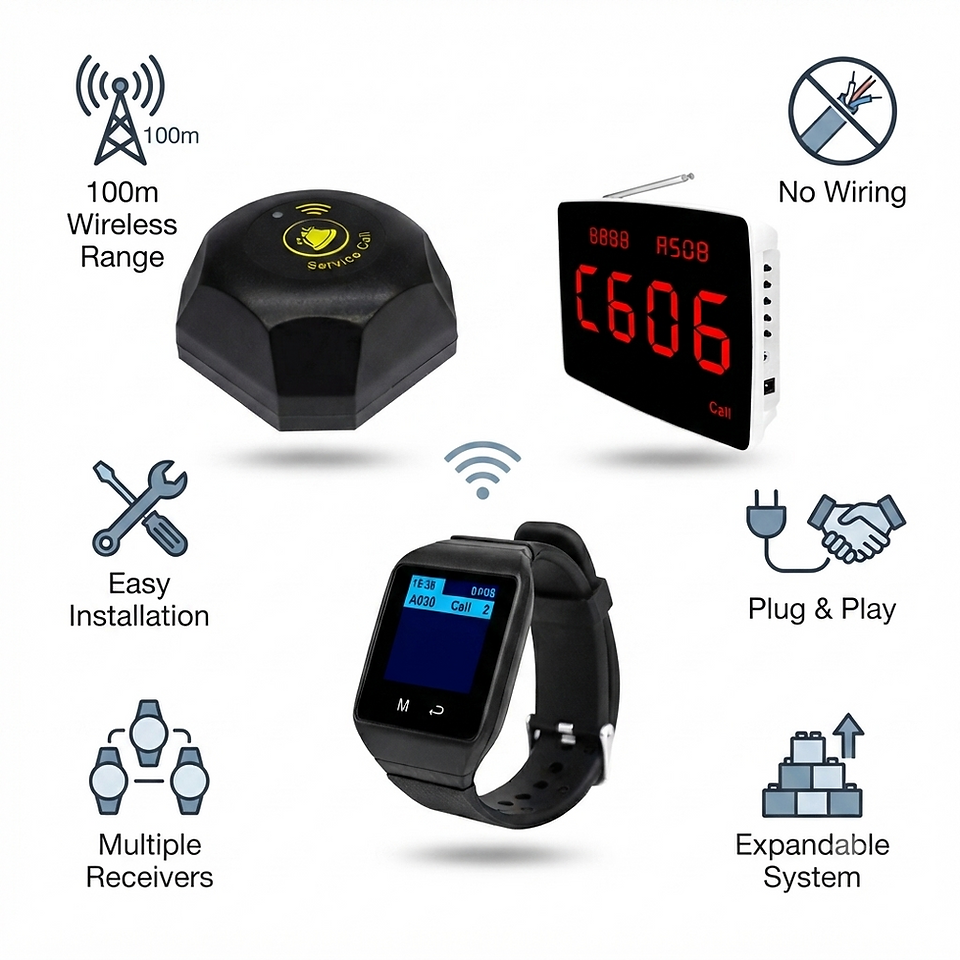
Wireless Nurse Call Bell 


Comments